

Words by Art Jefferson
Photography by Johannes Bünemann, Kynthos Khaos
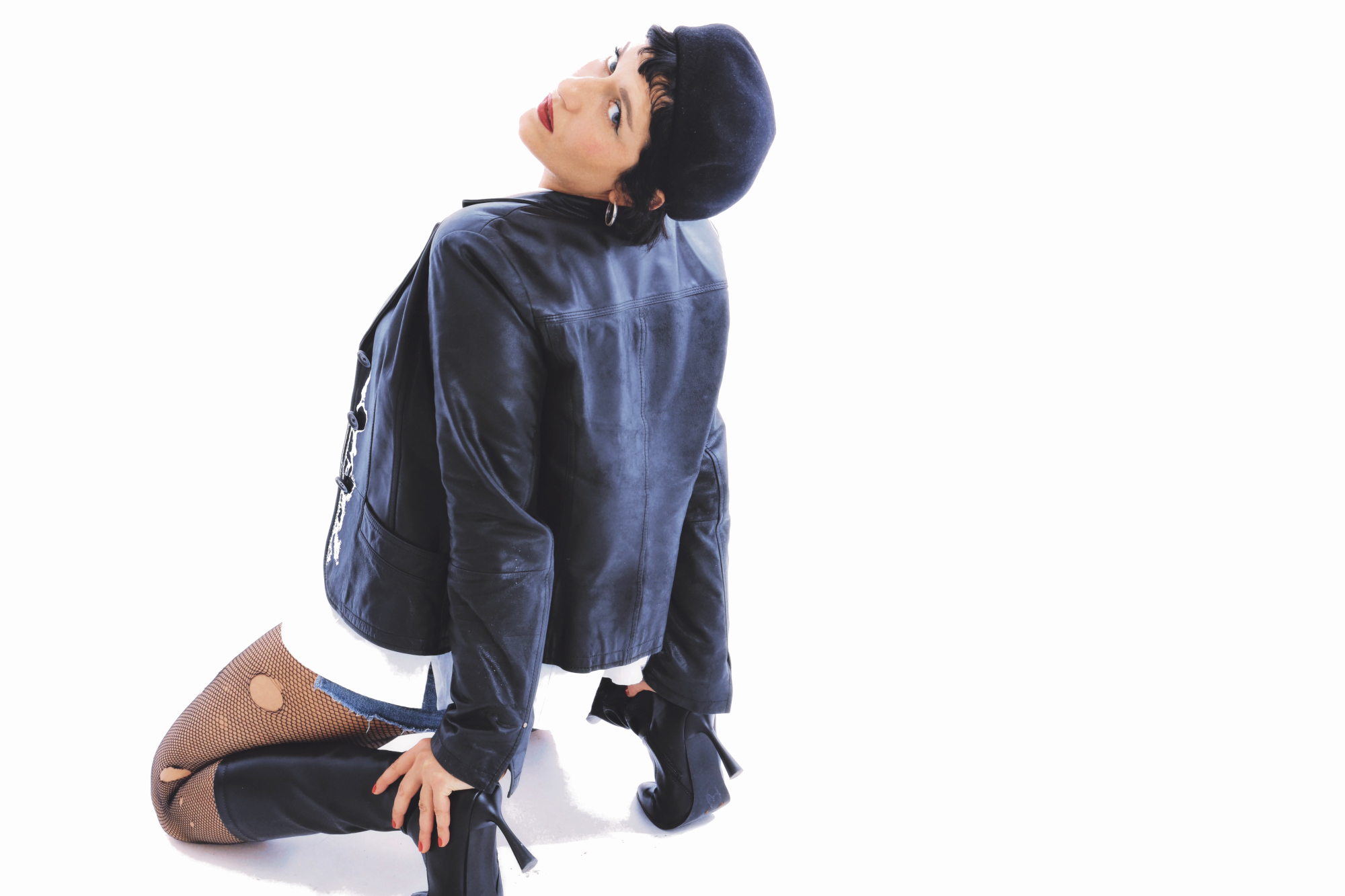
The music of Cosey Mueller is like crossing a musical bridge connected to yesteryear and the present. Based in Berlin, the multi-disciplinarian creates sounds that are steeped in synth-pop, post-punk, new wave, electro, and synthwave. If you close your eyes whilst listening to her recordings, it wouldn’t be farfetched to feel transported to an underground club of the early 80s, an avant-garde theatre house, or even a fashion runway show. There is a creative liberation that exists in her work, refusing any constraints by the typical roping of the industry.
No stranger to pushing boundaries, Cosey Mueller’s fearless approach to music can be traced back to her time as member of the group Glaas, an experimental band that created an amalgamation of in your face punk, post-punk, and art rock, laced with coldwave grit. She would carry on that tradition of expression in her solo releases which include her 2021 LP Interior Escapes, 2023’s Irrational Habits, and her 2024 album Softcore.
Cosey Mueller’s latest record titled Embodiment of Denial magnifies the very idea of freedom, with a theme of rebelling against any outside forces that juxtapose her defining of self and purpose of life. Using synthwave textures to float atop a decorative palette of post-punk, coldwave, and frenzied electronica, the new work has an audible gripping that you never want to escape.
Where does your musical journey begin? Were you always writing and making music as a kid?
Cosey Mueller – Music has always been an essential part of my life, since I was a kid. But writing my own music l came a bit later, when I was in my mid twenties and I had just moved to Berlin. I have an artist’s education so this is where I learned how to work on my own material and be inventive. The solo project began in 2020 and that was the first time where I wrote, composed and produced music all by myself.
When did your love of post-punk, new wave, and synth-pop first start? I ask this because the way you create music is so genuine and beautifully rooted to the core culture of the sounds and scene, this truly feels straight from the soul.
Cosey Mueller – When I was around 13-14 years old I started discovering all kinds of music, and also the music history of the 20th century. From early rock & roll to 60s garage and 80s early electronic synth-based music. I was fascinated by the lyrics of Lou Reed and the stage personas of David Bowie… The underground electronic NDW stuff came a bit later when I met Schwund in 2016 (the other half of my first duo project Das Das). That stuff really fascinated me and seemed easy to do, even if you don’t have money to go to a proper studio. The good old punk ethic basically: everything is possible if you have ideas and good honest energy, virtuosity and money doesn’t matter.

Berlin has such a rich history of electronic music harking back decades. Can you talk about that lineage and how it plays a role when you’re working on tracks?
Cosey Mueller – I read the book Wir Kinder vom Bahnhof Zoo by Christiane F. when I was 13 years old. It had a great impact on me. I visited Berlin when I was a teenager because a friend lived there and I was so fascinated by the city. The history of the city by itself is crazy. I remember seeing Der Himmel über Berlin and crying because it was so beautiful. The atmosphere of Iggy Pop’s The idiot and Lust for Life is so intense and connected to this city. Malaria, Die tödliche Doris, Ideal were so great. Honestly, times have changed. But the spirit of the past lives on through music and it inspires and gives strength and hope to make something strong happen in the present. Berlin and its music history has a connection to my work for sure. I think it is something that keeps me going and motivates me to write music – this spirit, legacy and hope must live on.
The visual aesthetic to your work also jumps out. There is an art house feel to your videos, which again makes me think about groundbreaking underground films that pushed boundaries. When you’re recording, are you already contemplating the visual creations that will coincide with the music or does that happen after an album or a single is complete?
Cosey Mueller – I would say the videos come after the recording of the music is finished. But I always write down things, even if it’s something very general like ‘Use a strobe light’. And when there’s a song where it fits, I use the idea. But some songs and lyrics give a visual direction already. For example ‘Zum verlieben keine Zeit’ (translated: no time to fall in love) had the visual ideas in its theme, that’s why I used the heart balloons and heart shaped glasses. Or ‘Trotzstadt’ which is a song about Berlin so I ended up filming the city and a gig I played here. I’m inspired by Kenneth Anger, John Waters, Jean Luc Godard, Nick Zedd and many more.

Your new record is called Embodiment of Denial. What is the inspiration behind the title?
Cosey Mueller – I don’t remember exactly where the title came from, it might have been something I read by Marguerite Duras. What interested me is the idea of not embodying something but the denial of it, or denial itself. And turning it around: ‘Embodiment of denial’ or ‘Denial of embodiment’. My personal interpretation of the title is discovering the importance of self-empowerment and doing something in life which is my own. I want to make this very clear, to establish it for myself and anyone who bothers to listen.

I love ‘Der Politiker’. While the lyrics are pretty cheeky, the underlying message is evident. I’ve heard so many people complain about the lack of artists speaking out about the current political climate around the world. How do you feel about that critique and do we put too much pressure on artists in general to be political?
Cosey Mueller – Well the song is very satirical obviously. It’s about role playing and power games, and how that can be found in politics but also in other practices. About the critique, I feel the opposite: politicians get way too much attention, the only solution is to put more attention to art and make it become alive and powerful. Being political is something an artist cannot do intentionally in my opinion.
You released Softcore in 2024. How would you juxtapose the creative process of that album and Embodiment of Denial, or was it similar in a way?
Cosey Mueller – It was similar because I have been touring a lot and the whole creative process was done sporadically for both albums. The recording methods were also similar. What was different was my attitude to perfection, with Softcore I went crazy over doing everything as perfect as possible. Whereas Embodiment of Denial was more relaxed, I took things more easy.
Finally, you’re so hands on with much of your work from the writing and mixing , even down to the artwork. How important is having that creative control?
Cosey Mueller – It’s very important because it’s my work and I know best how to do it and what it should sound like, look like, and be about. I have a good intuition and pretty concrete artistic visions.
Purchase & Stream Embodiment of Denial
Cosey Mueller Instagram
Cosey Mueller Facebook
Cosey Mueller YouTube Channel